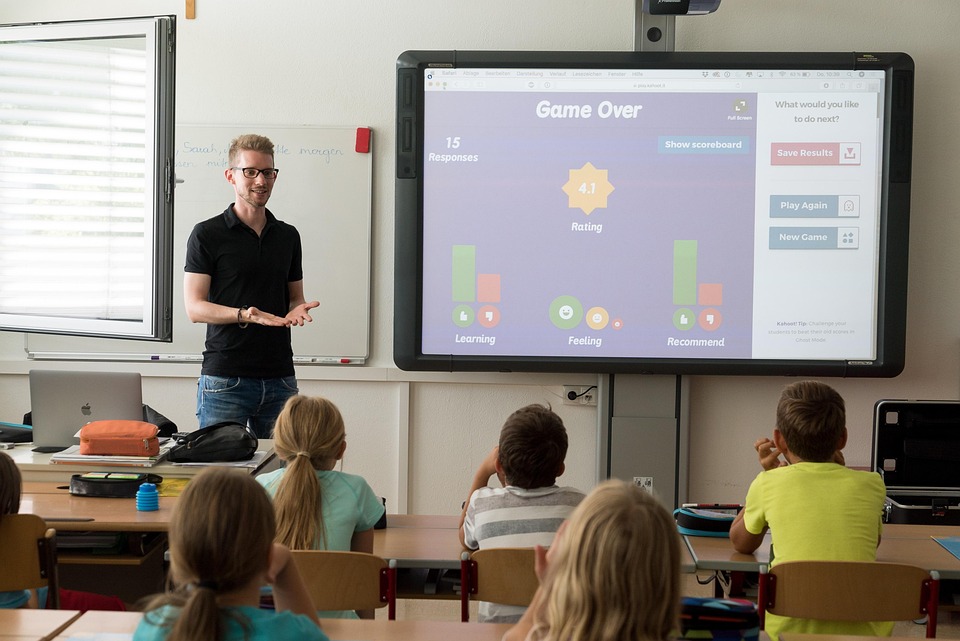
There has been a great deal of rhetoric criticizing the “Sage on the Stage” mindset of some educators in favour of a “Guide on the Side” approach. Rote learning, Socratic, traditional, old school all have become derogatory in pedagogy. However, the sage must continue to play a vital role in education.
My daughter is currently in grade 8. In her history block, she was directly taught 5 reasons for Canadian Confederation. She was then guided to rank the reasons  according to their importance and identify who was left out of the process, This led to expanded research to support conclusions. All of the real, demonstrable learning was built on the initial step of explicit teaching. According to her, “If we had been told to find 5 reasons for confederation we might have found 2 and not really understood even those. Even if I had been told to do the other 2 parts of the lessons, they would have been pointless - I wouldn’t have learned anything.”
My daughter is generally a self-motivated learner - a perfect candidate for all the recent trends in education: Genius Hour, PBL, Inquiry Projects. But what she desperately craves is to trust the knowledge and skills she is receiving. She craves a teacher to start her learning on a clear path with the believable illusion of an objective measure and achievement of standards that move her forward in her knowledge and skills. She talks about being prepared for high school. At this difficult age, she wants to have some confidence in her education, which comes from having confidence in her teacher, her trainer, her sage.
When a teacher provides her with a variety of paper and digital resources to explore and learn the content and skills on her own, she becomes frustrated and disappointed. Why go to school then, if I have to teach myself?
Yes, the world is in a state of constant change and the most important skill we can teach youth is “how to learn” effectively and efficiently. But part of that learning is the necessity of automaticity and internalized knowledge that doesn’t require Google. It means that new skills and knowledge need to be built on a solid foundation and one of the responsibilities of teachers is to provide the materials for the foundation and train young people how to assemble them.
There are times when learners are ready to assume the reins and work with the support of guides and mentors. But not until they have the foundational knowledge skills.
The following foundational skills need to be explicitly taught and assessed in schools:
- Behave appropriately for the classroom (follow instructions, listening without interrupting, raising your hand, sitting down and working quietly)
- Grade-appropriate vocabulary
- Read & comprehend grade-appropriate texts
- Write with correct grammar
- Write legibly (penmanship & spelling)
- Speaking clearly to express ideas, ask questions
- Writing in grade-appropriate forms to express ideas
- Use grade-appropriate research tools (dictionary, textbook, online, library, citing sources)
- Age appropriate math facts
- Algorithms for solving age-appropriate math problems
- Basic knowledge of national and world geography and history
- Apply the Scientific method
- Understanding of ecosystems
I am a Secondary School English teacher, so I am aware that my list is weighted heavily on communication skills. But these skills align with the Conference Board of Canada Employability Skills. There are many other skills and knowledge areas that are also important, engaging, inspiring, and empowering to learners. I am not trying to limit our role as teachers to drill sergeants, to the exclusion of all else. I am, however, saying that we have a professional and ethical responsibility to make sure that all students can succeed at these skills and, if they cannot, they need more instruction, directed practice, and remediation, not more free time. And, yes, that means less time for independent learning, project-based learning, play-based learning, inquiry projects, and genius hour projects.
As a parent, I want my children to have the opportunities to explore their strengths and interests - it makes them feel good. Yet, when they can’t print legibly or speak clearly or divide numbers or read accurately, this is what they need most.